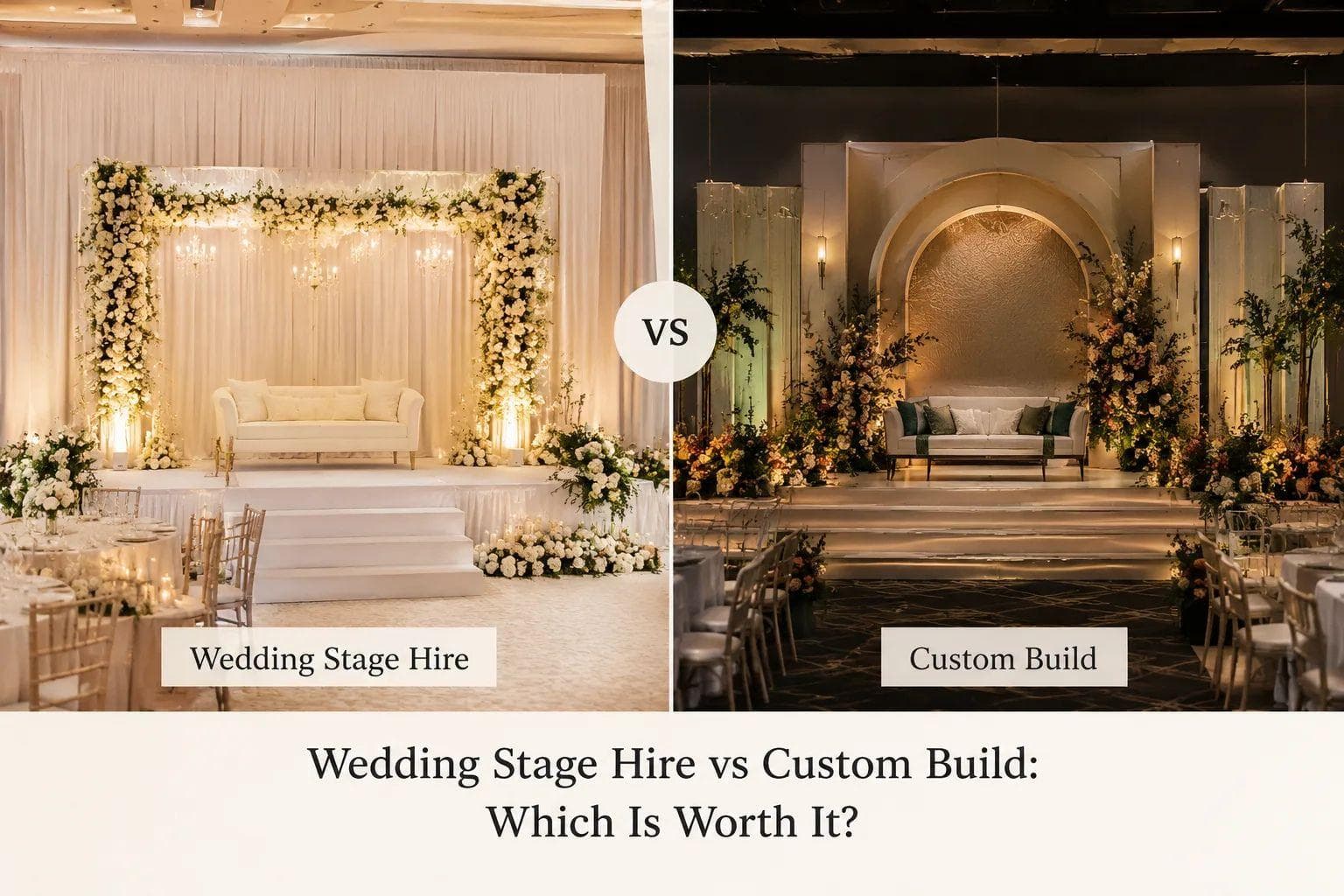
The main difference between wedding stage hire and a custom build is where the stage comes from: hire gives you a proven stage from stock, while a custom build is designed and made around your venue and your look. Wedding stage hire vs custom build mostly comes down to budget, timeline and how much the stage needs to say about your day. For most UK couples with a standard layout, hire is the sensible choice. If you want something nobody else has, a custom build can justify its price. Here is how to tell which side you are on.
What is the real difference between hiring and building a wedding stage?
Hiring means choosing from stock: modular decks, steps, skirting and backdrops that arrive, get fitted and leave after the night. Building means a designer draws something new, a workshop makes it, and the result is shaped for one vision, such as a mandap, a sangeet stage or a sweetheart table platform.
Neither is better by default. They solve different problems, so the choice deserves thought before you pay a deposit.
Wedding stage hire vs custom build at a glance
| Factor | Hire | Custom build |
|---|---|---|
| Cost | Lower upfront; priced on size, delivery and fitting | Higher; covers design, materials and fabrication |
| Lead time | Short, depends on stock and date | Longer, needs design sign off and build time |
| Design freedom | Good, especially when styled | Complete |
| Venue fit | Standard sizes, may need adapting | Made to your measurements |
| Reuse | Returned after the event | Can often be adapted later |
| Best for | Simple layouts, tighter budgets | Statement designs, unusual spaces |
Bottom line: hire wins on cost and speed, while a custom build wins on originality and fit.
When is wedding stage hire the smarter choice?
Choose hire if your budget is firm, your date is close or your layout is conventional. A well chosen base can look expensive once it is styled with the right backdrop, florals and lighting.
Pros: lower upfront cost, quicker booking, tested equipment.
Cons: fixed sizes and finishes, and popular dates book out.
If you are comparing wedding stage hire options, ask what the price includes: delivery, installation, strike, steps, skirting and insurance.
Myth: A hired stage always looks generic.
Reality: The base is standard, but the finish is not. Backdrops, drapes, florals and lighting do most of the visual work, and that is where a hired stage becomes personal.
When is a custom wedding stage worth the extra money?
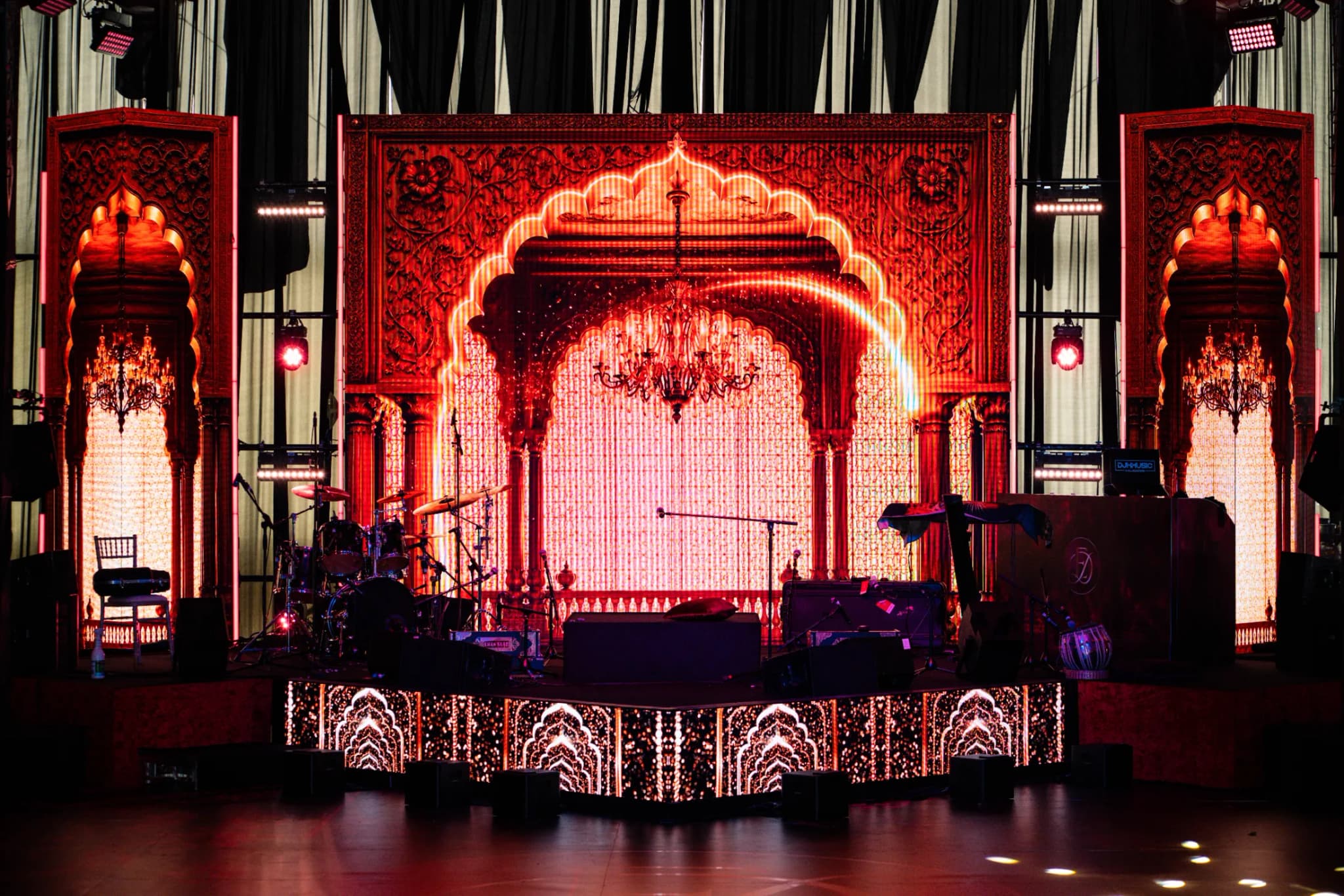
A custom wedding stage earns its cost when the design is ambitious, the room is awkward or the stage anchors several events, such as a mehndi, sangeet and reception. A bespoke wedding stage build can also be made to your venue's exact footprint, load limits and entrance widths, which stock staging can only approximate.
Allow more time, though. Custom work needs design approval, fabrication and often a trial fit, so ask for the lead time before you commit, not after.
In practice, the couples who regret a build are usually the ones who chose it for looks alone, without checking lead times and venue rules first. Kudos Music designs and builds bespoke stages in its own workshop, so those practical questions come up in the very first conversation.
Is a hybrid wedding stage the best of both?
Often, yes. A hybrid uses a hired structural base and adds custom elements on top, such as a made to order backdrop or fascia. You keep the speed and safety of tested staging and still get a look nobody else has.
Any supplier, Kudos Music included, should be able to quote hire, build and hybrid side by side.
What affects wedding stage hire cost in London and across the UK?
Hire pricing usually follows stage size and height, delivery distance, install and strike time, and extras such as steps, rails and skirting. A build adds design time, materials and fabrication labour.
Venues move the number too. Central London sites often have tight load-in windows and parking limits, which can lengthen crew time on site. Always ask for an itemised quote so you can compare like with like.
Which venue rules should you check before choosing?
Ask the venue first, because its rules can rule out an option before price does:
- Ceiling height and fixed beams
- Floor loading and surface protection
- Load-in times, lifts and access widths
- Fire safety certificates for drapes and backdrops
- Supplier insurance requirements
Which option is worth it for your wedding?
In the wedding stage hire vs custom build debate, hire is worth it for most weddings with a standard layout and a firm budget, while a custom build pays off when the design, the room or the number of events demands it. Start by checking venue rules and lead times, then ask for hire, build and hybrid quotes side by side.
Get a stage that fits your venue and budget
Not sure which route suits your venue and budget? Talk to Kudos Music about hire, bespoke builds or a mix of both, and request a quote for your wedding stage.
Frequently asked questions
Q: Is wedding stage hire cheaper than a custom build?
A: Yes, wedding stage hire is usually cheaper upfront, because you pay for use rather than design and fabrication. A custom build costs more but can be adapted for later events. The gap narrows if a hired stage needs heavy styling.
Q: How much does wedding stage hire cost in the UK?
A: There is no fixed price, because cost depends on stage size, delivery, install time and extras. Ask for an itemised quote that lists every line, including steps, skirting and strike. Quotes from different suppliers are only comparable when they include the same items.
Q: How far ahead should I book a bespoke wedding stage build?
A: Book as soon as your venue and date are confirmed. Custom builds need design approval and fabrication, so lead times run longer than for hire. Ask for the timeline in writing.
Q: Is wedding stage rental vs build an either or choice?
A: No, you can combine both. A hired base handles structure and safety while made to order elements carry the design. Check that the supplier can fit everything together on the day.
Q: Is wedding stage hire London more complicated than elsewhere?
A: Yes, it can be more complicated, mainly because of access. Central venues often have restricted load-in windows, lifts and parking, which affect install time and cost. Share the venue details with your supplier early so they can plan around them.